SNSAS — Smart IoT Terminal
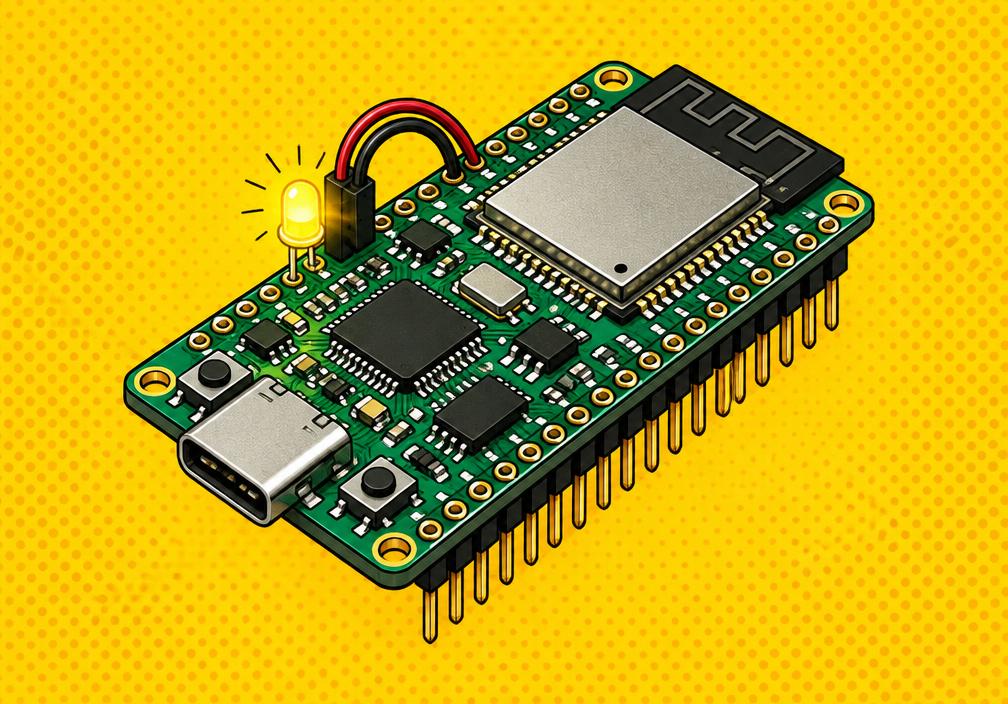
A standalone RFID attendance terminal built around an ESP32-S3. Employs offline-first MicroPython firmware with local flash caching and seamless cloud synchronization.
ESP32-S3 with 8MB Flash
MFRC522 13.56MHz RFID
0.96″ I2C OLED & Audio Buzzer
Offline-First MicroPython
HOW IT WAS ACTUALLY BUILT.
Overpriced biometric hardware with slow roll-call
Commercial biometric attendance terminals often cost hundreds of dollars, require vendor lock-in cloud subscriptions, and freeze when Wi-Fi drops. The goal was to build a fast, sub-$20 standalone terminal that works offline.
Compact modular reader station
Prototyped the terminal integrating an ESP32-S3 microcontroller, MFRC522 contactless card reader, SSD1306 OLED screen, RTC time synchronization, and distinct audio tones for valid versus duplicate scans.
Sub-10ms instantaneous card verification
Structured local flash storage to cache student ID hashes directly on the microcontroller. When a student taps, verification occurs locally in under 10ms with no network round-trip delay.
Queueing scans during campus network outages
Built a background queue worker that stores scan records in flash memory during Wi-Fi disconnects and automatically flushes records to the cloud in chronological order upon reconnection.
Automated classroom reporting and audit
Connected the terminal to Supabase PostgreSQL using atomic RPC functions to prevent double-taps, alongside Google Apps Script webhooks for instant attendance sheet synchronization.
THE NUMBERS BEHIND THE BUILD.
Verification speed
Offline queue capacity
Cost reduction
DEEP DIVE INTO THE STACK.
Architecture specifics across firmware, hardware design, and models.
High-frequency SPI bus communication to MFRC522 transceiver module, dedicated I2C channel for OLED rendering, and hardware PWM buzzer feedback.
Non-blocking event loop managing card polling interrupts, screen animations, network health monitoring, and atomic flash writes.
RESTful JSON payloads submitted with HMAC authentication headers to PostgreSQL stored procedures that ensure idempotency.